Skip to content
MARVELOUS SWEATERSLtd · Est. 2007

MSL/04/YARN

IndexMaterials

04Materials

Yarn decides
almost everything.

Handle, drape, weight, shrinkage, price and how the garment looks after ten washes are all set before a single course is knitted. These are the families we run, and what each one is actually good for.

Yarn families
8
Count range
2/32 – 1/14 Nm
House shades
8
Lab dips
Cabinet assessed
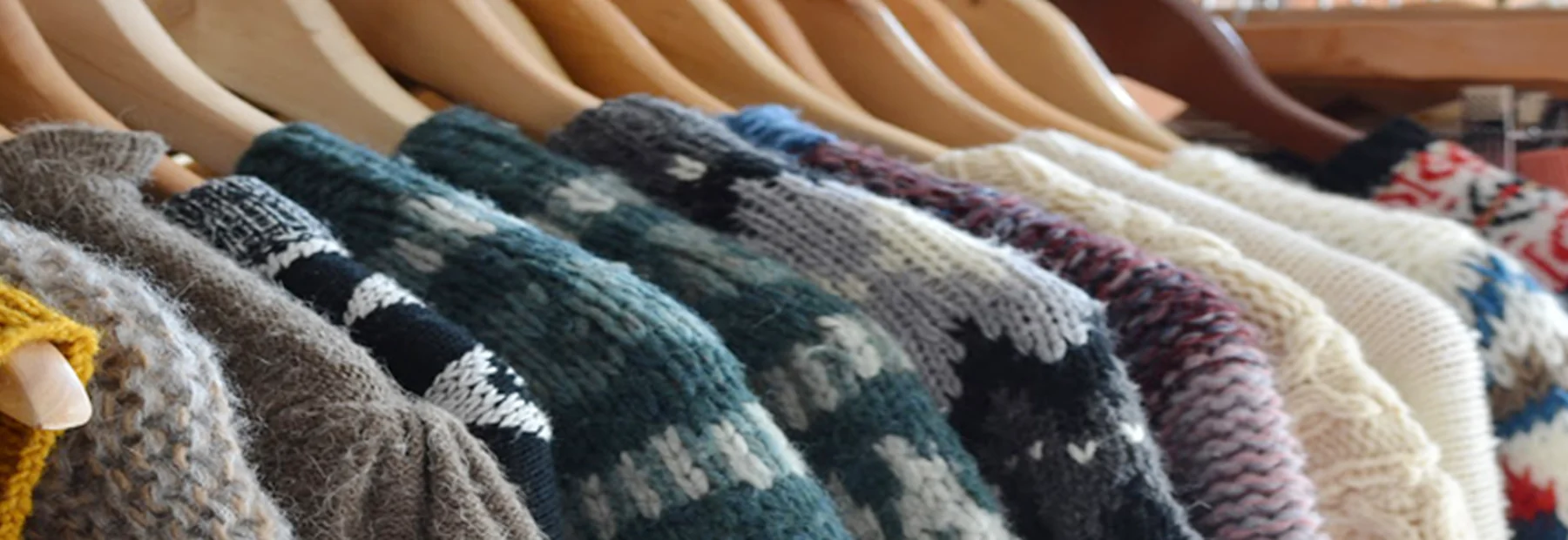
Finished sweaters on the rail, ready for inspection
04.1Yarn families

Eight qualities, and what each one is for.

Standard acrylic and cotton counts come from domestic spinners; specialist blends are sourced overseas. Every lot arrives against the spinner’s certificate and is checked before it reaches a machine.

  • Y-01

    Acrylic

    The workhorse of the floor. Takes bright shades without a dyehouse premium, holds shape through wash, and costs predictably across a long programme.

    • Volume pullovers
    • Kidswear
    • Jacquard
    • Chunky texture
    Handle
    Dry, resilient, colour-fast
    Gauges
    3GG · 5GG · 7GG · 12GG
    Counts
    2/28 Nm – 2/8 Nm
  • Y-02

    Cotton & cotton blends

    For transitional and warm-market programmes. Heavier per square metre than acrylic at the same gauge, so weight targets need setting at costing rather than at sample.

    • Spring knitwear
    • Fine crew
    • Polo knits
    • Kids
    Handle
    Cool, matte, weighty
    Gauges
    5GG · 7GG · 12GG
    Counts
    2/32 Nm – 2/14 Nm
  • Y-03

    Wool & wool blends

    Wool-rich and wool-blend qualities for autumn and winter drops. Blend ratio is declared on the trim card and verified against the spinner's certificate.

    • Aran & cable
    • Heavy pullovers
    • Cardigans
    Handle
    Warm, springy, full
    Gauges
    3GG · 5GG · 7GG
    Counts
    2/30 Nm – 2/9 Nm
  • Y-04

    Lambswool

    Where a wool handle is wanted at a finer gauge. Needs a gentler wash recipe and tighter shrinkage control than a blend.

    • Fine gauge
    • Tipped knitwear
    • Intarsia
    Handle
    Soft, fine, lofty
    Gauges
    7GG · 12GG
    Counts
    2/30 Nm – 2/16 Nm
  • Y-05

    Cashmere-like blends

    Engineered acrylic and nylon-viscose qualities brushed and washed to a cashmere handle. The finishing recipe is part of the approved sample; the yarn alone does not deliver it.

    • Premium fine gauge
    • Roll necks
    • Knitted dresses
    Handle
    Brushed, dense, next-to-skin
    Gauges
    12GG
    Counts
    2/32 Nm – 2/26 Nm
  • Y-06

    Chenille

    Distinctive surface, unforgiving on tension. Runs on hand beds under a tighter panel-weight tolerance than a plain yarn.

    • Cardigans
    • Statement pullovers
    Handle
    Velvety, high-pile
    Gauges
    5GG · 7GG
    Counts
    2/12 Nm – 2/6 Nm
  • Y-07

    Mohair & alpaca-look

    Blown or brushed qualities that read as luxury at a mid price. Shedding is controlled in finishing and tested before shipment.

    • Loose-gauge knits
    • Oversized silhouettes
    Handle
    Hairy, light, halo
    Gauges
    3GG · 5GG · 7GG
    Counts
    1/14 Nm – 2/10 Nm
  • Y-08

    Recycled & sustainable blends

    Recycled polyester and recycled acrylic qualities are available on request, supplied against the spinner's transaction certificate. Chain-of-custody scheme membership is buyer-led — tell us what you need to see on the paperwork.

    • Programmes with a recycled-content target
    Handle
    Varies by base
    Gauges
    3GG · 5GG · 7GG · 12GG
    Counts
    By quality
04.2House shade card

Standard shades, held in the colour library.

Run these without a lab dip cycle, or send your own standard and we will match to it. Colour is signed off in the assessment cabinet under controlled light — never against a screen, and never against the Pantone book when a physical standard exists.

  • MSL-01
    Ecru
  • MSL-02
    Oat
  • MSL-03
    Mist
  • MSL-04
    Sky
  • MSL-05
    Ochre
  • MSL-06
    Rust
  • MSL-07
    Scarlet
  • MSL-08
    Olive
04.3Finishing

Handle is bought in finishing.

A cashmere-like handle is not something a yarn delivers on its own. It comes from brushing and a wash recipe, which is why the recipe is part of the approved sample rather than a variable the floor can adjust later.

How we control it
Garment wash
Written recipe per quality, locked at sample approval
Brushing
Single-pass surface brushing for cashmere-like handle
Tumble & press
Vacuum ironing across 44 tables
Enzyme / softener
Where the buyer's handle standard calls for it
Anti-pill treatment
On request, tested to the buyer's pilling protocol